Source ford fiesta car tailgate strut for SUVs, Sedans, and Trucks
Compare 30 listings for ford fiesta car tailgate strut from verified suppliers. Buyers can review specifications, pricing, and delivery times for gas-filled steel springs compatible with various vehicle models.
Key considerations
Products List









Comprehensive Sourcing Guide
Strategic Sourcing Guide for Ford Fiesta Tailgate Struts
Understanding Component Specifications and Compatibility
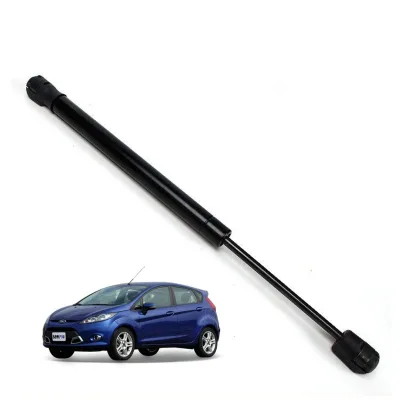
When sourcing replacement gas springs for a Ford Fiesta, the primary challenge lies in navigating the vast array of part numbers and mechanical configurations available in the global market. The Ford Fiesta, produced across multiple generations, utilizes varying tailgate mechanisms depending on the model year and body style. Buyers must recognize that a single keyword search often yields results for different vehicle platforms, including sedans, hatchbacks, and SUVs. The core component in question is the gas-filled strut, which functions as a hydraulic or pneumatic cylinder to assist in lifting the rear hatch.
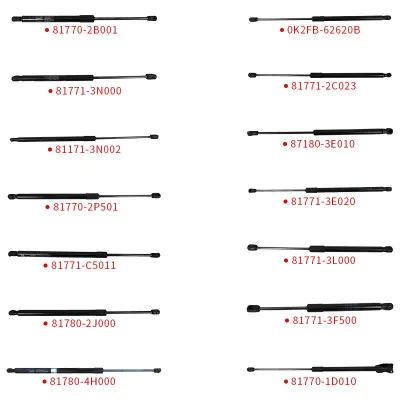
Technical verification begins with the specific model designation. In the provided market data, several distinct part numbers appear, such as 81770-1y000, 81770-1h010, and 81770-f1000. While these specific codes are listed under Hyundai and Kia applications in the source material, they illustrate the critical nature of cross-referencing OEM numbers. For a Ford Fiesta, the buyer must ensure the strut's mounting points, rod diameter, and extended length match the factory specifications exactly. The observed data indicates that "Universal" standards exist, but relying on a universal fit without verifying the specific dimensions can lead to installation failures.
The physical attributes of the strut are equally critical. The supply chain data highlights "Air Spring" and "Gas-Filled" as the primary types available. The material composition is predominantly "Steel," with some listings noting "Stainless Steel" for corrosion resistance, which is a vital consideration for rear tailgate components exposed to the elements. The position is consistently listed as "Rear" or "Rear Tailgate," confirming the application area. However, the presence of "Front" position listings in the same dataset serves as a warning; buyers must filter strictly for rear applications to avoid purchasing front suspension components by mistake.
Compliance, Certification, and Quality Verification
In the B2B procurement of automotive parts, compliance and certification are not merely administrative hurdles but essential risk mitigation strategies. The observed market data includes a certification entry reading "ISOMaterial:Stainless Steel." This phrasing suggests a potential conflation of ISO standards with material properties, a common occurrence in supplier listings that requires buyer diligence. A legitimate supplier should provide a clear, standalone ISO certification (such as ISO 9001 for quality management systems) rather than embedding it within a material description. Buyers must request valid, up-to-date certification documents to verify that the manufacturer adheres to international quality management protocols.
Quality assurance is further evidenced by claims of "100% Professional Test" and "100% Tested" found in the supplier data. While these are positive indicators, they represent observations of specific listings rather than a guarantee for every product in the category. To validate these claims, procurement teams should inquire about the specific testing protocols employed. Does the testing involve pressure retention cycles, temperature resistance checks, or load-bearing stress tests? The absence of specific test data in the general market overview means the buyer must define these requirements in their Request for Quotation (RFQ).
Furthermore, the condition of the parts is a non-negotiable factor. The data consistently lists products as "100% New." In the context of used or refurbished parts, this distinction is vital. For a Ford Fiesta tailgate strut, a new unit ensures the internal seal integrity and gas pressure are at factory specifications. Buyers should explicitly state in their contracts that "100% New" refers to brand-new, unused inventory, excluding any refurbished or remanufactured units unless specifically agreed upon. The "Quality: 100% Professional Test" attribute suggests a high standard, but without third-party audit reports, this remains a self-attested claim that requires on-site or third-party verification during the supplier evaluation phase.
Cost Drivers and Pricing Dynamics
The pricing landscape for automotive tailgate struts is influenced by several dynamic factors, as evidenced by the observed price range of 1 to 189.85 USD. This wide variance indicates a spectrum of product quality, material grades, and supplier capabilities. The lower end of the range likely corresponds to basic steel construction with standard gas pressure, while the upper end may reflect stainless steel variants, specialized packaging, or higher volume discounts.
Cost is also heavily impacted by the Minimum Order Quantity (MOQ). The data reveals an MOQ range from 1 piece to 200 pieces. For buyers seeking to replace a single failed strut, an MOQ of 1 is ideal, as seen in the "Selling Units: Single item" and "MOQ: 1 Pcs" entries. However, for fleet maintenance or aftermarket distributors, an MOQ of 20 pieces, as noted in other listings, may be necessary to achieve favorable unit pricing. The "Supplier Ability: Have in Stock" attribute is a significant cost driver; suppliers with immediate inventory can often offer better pricing by eliminating long lead times and storage costs associated with manufacturing on demand.
Payment and shipping terms further influence the total landed cost. The observed "Price Term: EXW or Fob Ningbo" indicates that the base price often excludes inland freight and international shipping. Buyers must calculate the additional costs of logistics, including "DHL TNT UPS FEDEX EMS" shipping options mentioned in the data. The "Single gross weight: 10.000 kg" and "Single package size: 50X20X10 cm" provide concrete data for freight calculations, which can significantly alter the final cost per unit, especially for smaller orders. Additionally, the "Customization: Available" attribute suggests that bespoke packaging or branding can incur extra fees, which should be factored into the budget before finalizing the order.
Typical Applications and Market Segmentation
While the core keyword focuses on the Ford Fiesta, the market data reveals a broader application landscape. The "Application: Auto Engine Parts" and "Application: Automotive Parts" tags confirm the general utility of these components. However, the specific "Car Make" entries in the data list Toyota, Honda, Hyundai, and Kia, alongside the "Car Model: for Hyundai Kia" specification. This highlights a common phenomenon in the global auto parts market where suppliers often group parts by platform or mounting compatibility rather than specific brand exclusivity.
For a Ford Fiesta buyer, this means that while the specific part numbers for Hyundai and Kia are listed, the physical dimensions and gas pressure ratings of a Ford Fiesta strut may be compatible with these other models, or vice versa. The "Market: Europe, South America, North America, Italy, Austr" data suggests a global distribution network, implying that these parts are widely available across different regions. The "Place of Origin: Guangdong, China" and "Prod Origin: China" confirm that the majority of these components are manufactured in China, a hub for automotive component production.
The "Standard: Universal" designation is particularly relevant for aftermarket applications. It suggests that these struts are designed to fit a wide range of vehicles beyond the specific Ford Fiesta, provided the mounting geometry aligns. However, buyers must exercise caution. The "Universal" label should not be interpreted as a guarantee of fitment for every vehicle. The "OEM: Yes" attribute indicates that some suppliers offer parts that meet original equipment manufacturer specifications, which is preferable for maintaining vehicle warranty and performance standards.
Supplier Evaluation and Selection Criteria
Selecting the right supplier is paramount to ensuring the reliability of the Ford Fiesta tailgate struts. The data identifies "Guangzhou Xin Sande Auto Parts Co, Ltd" as a specific manufacturer, though buyers should not limit their search to this single entity. Instead, the evaluation should focus on the capabilities and attributes observed across the market. Key evaluation criteria include the "Supplier Ability: Have in Stock," which ensures immediate availability and reduces lead time risks.
The "Delivery Time: About 3-10 Working Days" is a critical metric for supply chain planning. Buyers should verify if this timeline applies to all orders or only to stock items. The "Service: 24 Hours Customer Service" attribute is another differentiator, indicating a supplier's commitment to post-sales support. For B2B buyers, the ability to resolve issues quickly is as important as the product itself.
Packaging is another area for scrutiny. The data lists "Neutral Package," "OEM Package," and "Al Lamp Package" as options. For a Ford Fiesta replacement, "OEM Package" is often preferred to ensure the part is protected and clearly identified. The "Packing: Customized Packing Acceptable" attribute offers flexibility for buyers who require branded packaging for their own distribution channels. However, buyers must confirm that the packaging meets the "Single package size: 50X20X10 cm" and "Single gross weight: 10.000 kg" constraints to avoid unexpected shipping surcharges.
Quality Control and Long-Term Procurement Strategy
Implementing a robust quality control (QC) process is essential for long-term procurement success. The "Quality: 100% Professional Test" and "Quality: 100% Tested" claims found in the data serve as baseline expectations. Buyers should establish a QC protocol that includes random sampling and functional testing upon receipt. This is particularly important given the "1 Year" warranty period mentioned in the data. A one-year warranty is standard for automotive gas springs, but the terms of this warranty must be clearly defined in the purchase agreement.
Long-term procurement considerations also involve the "Customization: Available" aspect. As a buyer's needs evolve, the ability to customize the product, such as altering the gas pressure or rod length, becomes valuable. The "Standard: 3066cm" listing suggests that some products have specific dimensional standards, but customization allows for adaptation to unique vehicle requirements.
Finally, the "Warranty: 1 Year" and "Service: 24 Hours Customer Service" attributes indicate a supplier's confidence in their product. Buyers should leverage these terms to negotiate better service levels. A strategic approach involves building a relationship with suppliers who demonstrate consistent quality, reliable delivery times, and responsive customer service. By focusing on these factors, buyers can secure a steady supply of high-quality Ford Fiesta tailgate struts, minimizing downtime and ensuring customer satisfaction in the aftermarket.
Comparative Analysis of Product Attributes
To assist in decision-making, the following table summarizes the key attributes observed in the market data, highlighting the variations buyers must navigate.
| Attribute Category | Observed Variations | Procurement Implication |
|---|---|---|
| Material | Steel, Stainless Steel | Stainless steel offers better corrosion resistance; verify based on climate exposure. |
| Type | Air Spring, Gas-Filled | Gas-filled is standard for tailgates; ensure pressure ratings match OEM specs. |
| Position | Rear, Front, Rear Tailgate | Strictly filter for "Rear" or "Rear Tailgate" to ensure correct fitment. |
| MOQ | 1 Pcs, 20 PCS, up to 200 | Lower MOQs suit single replacements; higher MOQs offer better unit pricing. |
| Origin | China (Guangdong, Beijing) | Verify specific factory location for quality consistency and logistics planning. |
| Packaging | Neutral, OEM, Customized | Choose OEM for brand integrity; Neutral for cost savings if branding is internal. |
| Warranty | 1 Year | Standard term; ensure clear claim procedures are defined in the contract. |
| Shipping | DHL, TNT, UPS, FEDEX, EMS | Compare carrier costs against delivery speed requirements for the specific region. |
This comparative analysis underscores the importance of detailed specification matching. While the market offers a wide array of options, the success of the procurement process depends on the buyer's ability to filter these options based on the specific needs of the Ford Fiesta application. By adhering to the technical specifications, verifying certifications, and evaluating supplier capabilities, buyers can secure reliable components that meet the demands of the automotive aftermarket.
FAQs
What material is used for the gas spring construction?
The gas springs are primarily constructed from steel, with some variants available in stainless steel for enhanced corrosion resistance. This material choice ensures durability for rear tailgate applications exposed to varying weather conditions.
Which certification standards do the suppliers typically provide?
Suppliers often list ISO certification alongside material specifications, though buyers should verify standalone ISO 9001 documents for quality management. The market data indicates a need for clear, separate certification proof rather than embedded text descriptions.
Can I order a single unit without meeting a high MOQ?
Yes, some listings allow a minimum order quantity of just one piece, while others require twenty units. Buyers should filter for suppliers with an MOQ of one to replace a single failed strut without purchasing bulk inventory.
How long is the typical delivery time for these parts?
The standard delivery time is approximately three to ten working days for items that are currently in stock. This lead time applies to suppliers with immediate inventory availability, reducing waiting periods for urgent replacements.
What warranty period is standard for these automotive parts?
A one-year warranty is commonly offered for these gas springs to cover manufacturing defects and performance issues. Buyers should confirm the specific warranty terms in the purchase agreement to ensure coverage for the full duration.
Which packaging options are available for custom branding?
Suppliers offer neutral, OEM, and customized packaging options to suit different distribution needs. Customized packing is acceptable, allowing buyers to request specific branding or protective measures for their specific market requirements.